How Much Do Custom Giant Inflatables Cost? A Manufacturer's Guide
Giant inflatables don't come with a standard price tag. A 3-meter standard tube man can cost under $1,000, while a 25-meter artist-grade city landmark installation can cost hundreds of times more. Both are called "custom inflatables." The price gap isn't chaotic manufacturer pricing — it reflects how wide this category actually is. This guide breaks down what really drives the cost, from a manufacturer building giant inflatables at every tier since 2006.
Why Giant Inflatable Costs Vary So Widely
The category covers everything from stock advertising tube men to one-off artistic landmarks commissioned by global brands. Entry-level standard builds typically start at around $700, while top-tier art commissions can reach seven figures in USD. A 100x price gap within the same category is normal, not unusual.
The final number depends on where your project sits along these six variables:
- Size — fabric area grows exponentially, not linearly. Doubling height often quadruples material usage.
- Form complexity — regular shapes (cubes, arches, spheres) are far cheaper than organic curves, character mascots, or anatomically accurate animal replicas.
- Material selection — Oxford fabric, PVC, long plush, PU-coated fabric, mirror PVC, transparent PVC — each sits at a different cost layer.
- Printing and artwork coverage — full-body digital print with Pantone-matched color costs significantly more than a simple logo on solid-color fabric.
- Functional add-ons — LED lighting, DMX control, helium-lift engineering, water-anchoring systems, RC mechanisms — each adds a distinct cost layer on top of the base build.
- Design and pre-production workload — 3D modeling, structural engineering, multi-round revisions, pre-production sampling are real labor hours that show up in the final number.
Breaking Down the Six Cost Drivers
1. Size
Size is the most direct cost variable, but it does not scale in a straight line. A 20m inflatable typically uses around 4x the fabric of a 10m build because surface area grows with the square of the dimension. Beyond 15m, engineering complexity also jumps — you need larger diameter air channels, reinforced stress points, custom internal tensioning, and heavier-duty anchoring. These are not upgrades at giant scale; they are what makes the structure hold shape.
For top-tier artistic work, pieces above 7 meters can run $3,000 per meter of height or more, because each additional meter requires recalculated load-bearing, internal tensioning, and structural verification.
2. Form Complexity
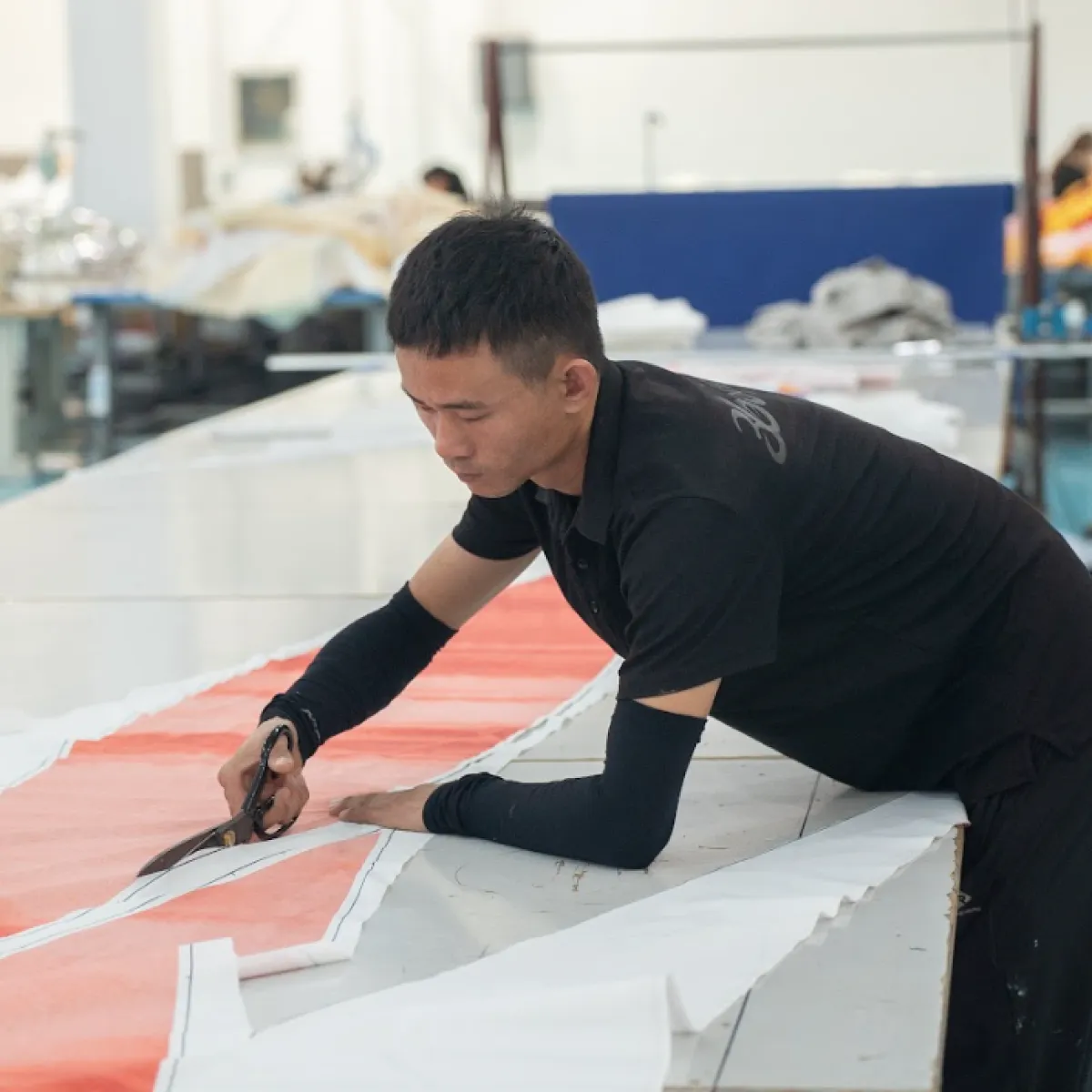
A giant sphere and a giant panda sculpture may share the same height, but the panda can cost several times more. Character mascots and realistic animal replicas need dozens of individual fabric panels, hand-adjusted curvature, and manual finishing to get anatomy right. Abstract or geometric forms require fewer panels and less finishing time.
3. Material Selection
Oxford fabric is the most commonly used outdoor material — durable, UV-resistant, cost-efficient. PVC is a middle tier, used for specific visual effects or waterproof requirements. Long plush, mirror PVC, and transparent PVC sit at higher cost layers because they either require layered construction (plush is stitched onto a base fabric) or use specialized coatings.
4. Printing and Artwork
The simplest and cheapest option is solid-color fabric with a small vinyl-applied logo. Costs rise when you need:
- Full-body digital print with brand-specific Pantone matching
- Gradient or photographic artwork requiring large-format color-managed printing
- Fine detail zones requiring hand-finishing on top of digital print
- Multi-layer texture (printed base + plush or stitched overlays)
For brand-critical areas like logos, facial features, or signature colors on a 20m+ build, digital print alone cannot always hold detail — hand finishing becomes necessary and adds real labor hours.
5. Functional Add-Ons
Each functional layer adds cost independently:
| Function | Cost Impact | When It Matters |
|---|---|---|
| LED lighting (RGB / DMX / APP-controlled) | Moderate to high | Night-time activations, festival installations |
| Helium lift engineering | High | Aerial displays, suspended branding |
| Water anchoring and floating platform | High | Lake, harbor, or pool installations |
| RC control and motion mechanisms | High | Parade floats, interactive displays |
| Sound systems and smoke effects | Moderate | Immersive entertainment projects |
| Structural wind-load reinforcement | Moderate to high | Large outdoor or coastal installations |
6. Design and Pre-Production
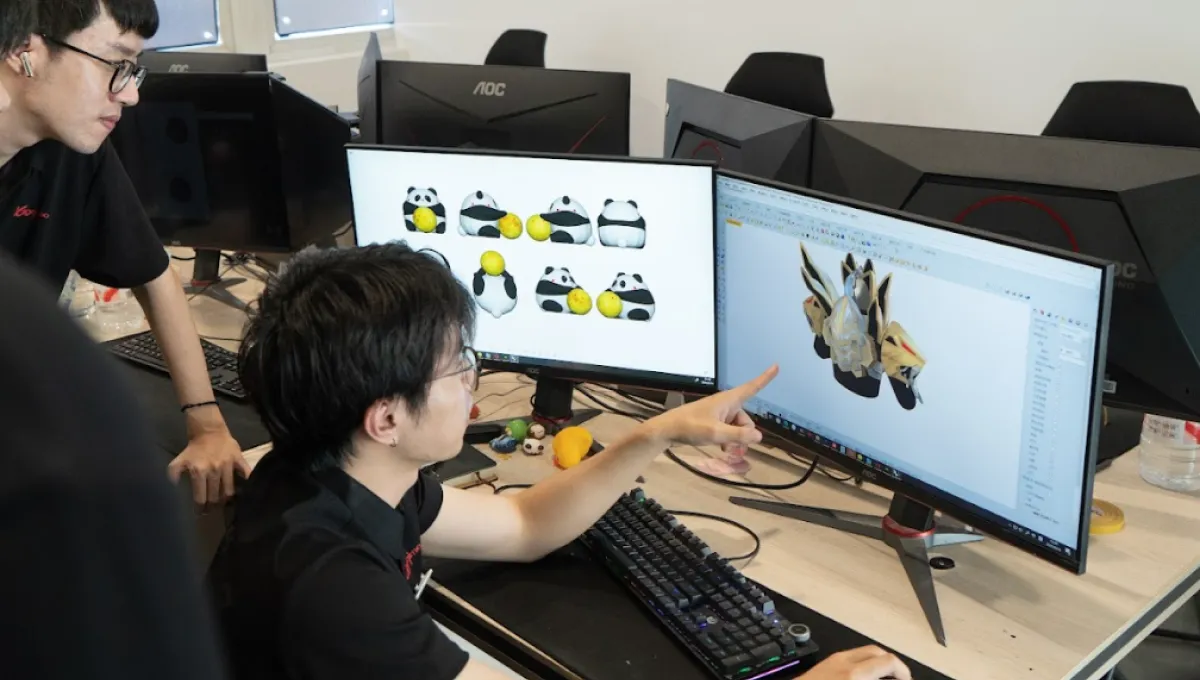
For custom giant projects, design work is a real cost driver. A straightforward brand replica can be built from a 2D logo and basic 3D render. An artist-level commission typically requires multiple concept rounds, detailed 3D modeling, structural feasibility analysis, material sample approval, and pre-production sampling — weeks of skilled labor before a single fabric panel is cut.
Three Pricing Tiers in the Giant Inflatable Market
Most giant inflatable projects fall into one of three tiers, each defined by the sophistication of the build, not just the size.
Tier 1: Standard Advertising Inflatables
Tube men, basic arches, stock-shape product replicas, simple event mascots. Materials are typically standard Oxford fabric, printing is limited to logo placement, and engineering is minimal. Pricing usually starts at around $700, and this is where most online catalog pricing lives. Production time is short — 7 to 15 days.
Tier 2: Branded Commercial Projects
Custom character mascots, brand-specific product replicas, event installations with LED or interactive elements, larger builds (10 – 20m). Full-body digital printing with Pantone matching, dedicated engineering review, and 3D preview are standard. Budget ranges typically fall between $3,000 and $30,000, depending on size and functional integration. Lead time extends to 3 – 5 weeks.
Tier 3: Artist-Grade Landmark Installations
City-scale landmarks, museum-quality public art, multi-element immersive installations, 20m+ signature pieces. Projects at this tier are effectively architectural commissions. Reference points: major concert tour installations, high-end festival landmark pieces, and licensed IP builds for brands like Disney, POP MART, and Tencent.
Public benchmarks exist as reference points. A single high-end inflatable stage installation for a major Asian concert tour has reported production costs exceeding $230,000. Top-tier art commissions starting at 7m height typically range from $20,000 to over $150,000, with the final number determined by form, engineering, and functional configuration. Lead time for this tier runs from 2 to 6 months.
At 360 Inflatable, we operate across all three tiers — from standard commercial builds to the landmark-scale commissions for global brands and IP licensors. Over 20 years, we have built a pricing structure that is transparent about what each variable contributes, so you see exactly what drives the number on a quote.
What You Should Prepare Before Asking for a Quote
The faster we can scope these four pieces of information, the faster you get an accurate number:
- Reference images or concept sketches — even rough phone photos work. This tells us form complexity.
- Target size — height, or overall dimensions in meters. This sets the material and engineering baseline.
- Deployment environment — indoor, outdoor, water, suspended, long-term, short-term. This determines material and anchoring requirements.
- Timeline and event date — this confirms whether standard lead time works or rush production is needed.
Functional add-ons, material preferences, and anchoring details we can work out together once the core brief is set.
Why the Cheapest Quote Is Often the Most Expensive
When four quotes come in and one is 40% lower than the rest, it almost always reflects one of three shortcuts:
- Thinner fabric that fails within months of outdoor exposure
- Single-stitched seams that bleed air under sustained wind load
- Skipped engineering — no 3D preview, no structural check, no anchoring plan — which typically surfaces as problems on installation day
A giant inflatable that fails at a brand launch, a city festival, or a public installation does not just cost the rebuild — it costs the event, the brand exposure window, and sometimes the relationship with the venue. The upfront savings rarely survive the first incident.
Bottom Line
"How much does a custom giant inflatable cost?" is the wrong first question. The right sequence is: what is the deployment environment, what form complexity does the concept require, what functions need to be integrated, and what production tier does the project actually belong in. Once those four variables are defined, the cost answers itself. A transparent quote from a manufacturer should break these out line by line, so you can see the cost logic, not just the total.
FAQ
Custom giant inflatables start from around $700 and scale up to seven figures in USD for top-tier artistic commissions. The category covers everything from stock advertising tube men to one-off landmark installations. Final pricing depends on six variables: size, form complexity, material, printing coverage, functional add-ons, and design workload. Without those details, any single-number answer is misleading.
Size and form complexity carry the most weight. Fabric area grows exponentially with dimensions, and complex organic shapes (character mascots, realistic animals) require far more pattern panels and hand finishing than geometric forms. After those two, material selection and functional add-ons are the next biggest cost drivers.
Quote variation usually reflects differences in material grade, seam construction, engineering workflow, and production tier — not arbitrary markup. A 40% cheaper quote almost always skips something measurable: thinner fabric, single-stitched seams, no structural review, or no 3D pre-production preview.
No. Costs scale non-linearly. Surface area grows with the square of dimension, so doubling height can mean 4x material use. Beyond 15m, engineering complexity jumps — reinforced air channels, stronger anchoring, heavier structural reinforcement all become required rather than optional. For top-tier art pieces above 7 meters, per-meter cost can reach $3,000 per meter of height or more.
LED lighting adds a moderate-to-high cost layer depending on the system: single-color LED is the most basic, RGB adds color control, DMX and APP-controlled systems sit at the higher end. Cost scales with the total lit area, control complexity, and power system requirements.
Standard commercial giant inflatables: 7–30 days. Complex branded character mascots or LED-integrated builds: 3–5 weeks. Artist-grade landmark installations at 20m+ with custom engineering: 2–6 months. Rush production is available for tight timelines but typically adds 20–30% to the base cost.
Drastically cheaper quotes usually reflect shortcuts that show up in the field — thinner fabric that fails under UV exposure, single-stitched seams that leak air under wind load, or no engineering review which surfaces as problems on installation day. For a giant inflatable deployed at a brand event or public venue, failure cost far exceeds any upfront savings.
Four things: reference images or sketches (even phone photos work), target size or dimensions, deployment environment (indoor / outdoor / water / suspended), and timeline. With these four defined, we can give you an accurate quote and lead time. Functional add-ons and material choices can be refined afterward.